Some notes just sound wrong in a way you can feel. Play two of them together and the room gets a little colder. For centuries people called one of those combos “the devil in music.” Since it’s Halloween, let’s dig into why it sounds so creepy and how to get it out of your own guitar.
Meet the tritone
The “devil’s interval” is the tritone. The name just means three whole steps. Count up from F: F to G, G to A, A to B. That’s three whole steps, so F up to B is a tritone. You’ll also hear it called a flat five or a sharp four.
It’s six half steps, which splits the octave exactly in half. On guitar that’s six frets. That’s part of why it feels so unsettled. It doesn’t lean toward home the way a fifth or a fourth does. Music professor Gerald Moshell put it well in an NPR piece: “It wants to go somewhere… You don’t know where it’ll go, but it can’t stop where it is.”
Was it really banned by the church?
Probably not the way the legend goes. Medieval church singers did avoid it because it sounded harsh, and theorists back then steered around it. The Latin nickname diabolus in musica shows up in writing from the 1700s, from guys like Andreas Werckmeister in 1702 and Johann Joseph Fux in 1725. There are no known citations of the phrase from the actual Middle Ages. And the stories about singers getting excommunicated for singing it are likely made up.
Still, the reputation stuck. Once composers got the freedom to write tense, dark music, the tritone became the go-to sound for trouble.
A Halloween classic with a detuned string
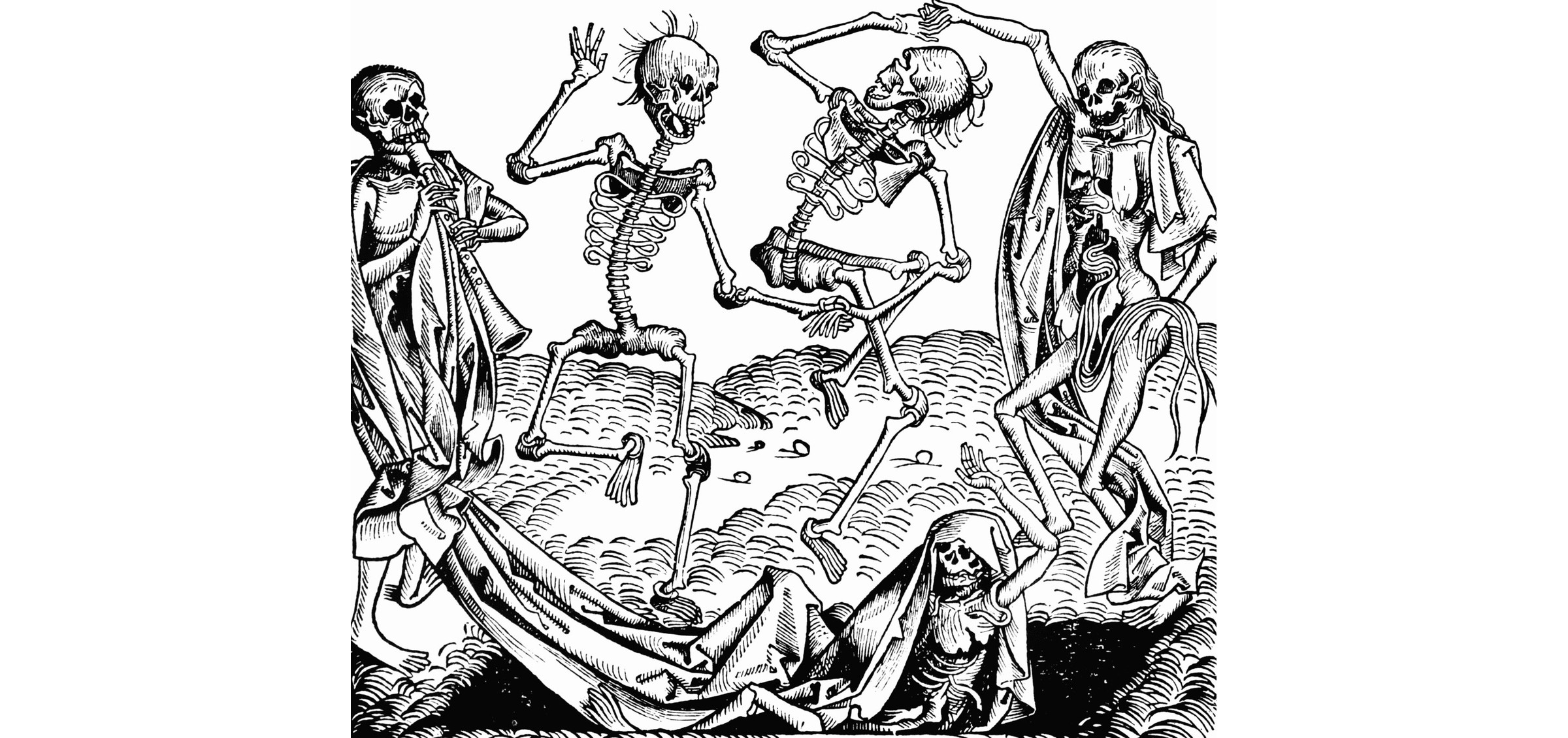
Camille Saint-Saens wrote Danse macabre in 1874, and it premiered in January 1875. The story behind it: Death shows up at midnight on Halloween, plays his fiddle, and the skeletons dance until the rooster crows.
The harp plays a single D twelve times, for the twelve strokes of midnight. Then the solo violin comes in on a tritone, A against E flat. Here’s the fun part for string players: the violinist tunes the E string down to E flat just to get that sound. Alternate tuning for spooky purposes, 150 years before drop D was cool. The first audiences didn’t love it, by the way. One writer later pointed to the “horrible screeching from solo violin.”
Where guitar players heard it first
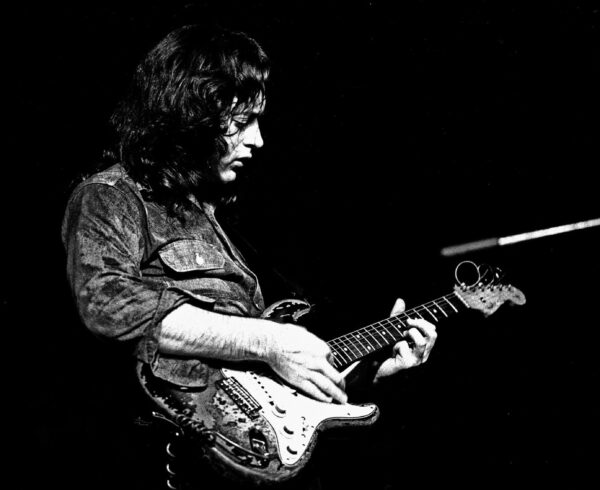
Purple Haze (1967). Jimi Hendrix opens the song with a B flat on guitar against Noel Redding’s E on bass. That’s a tritone, and it’s the first thing you hear.
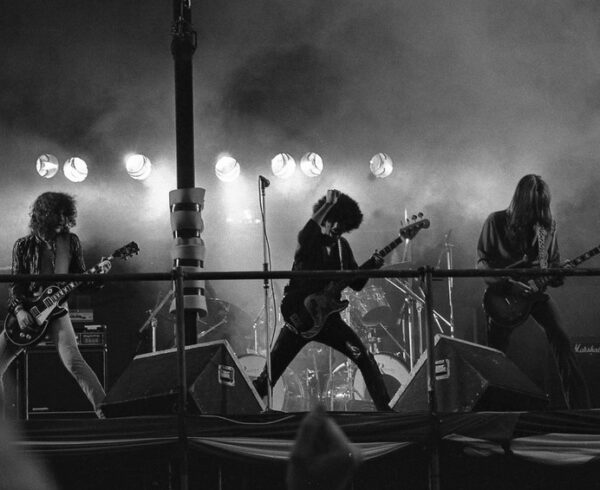
Black Sabbath (1970). The first song on Black Sabbath’s first album is built on G, the G an octave up, then C sharp, a tritone away. Tony Iommi came up with it after Geezer Butler started playing a bit of Holst’s “Mars, the Bringer of War.” Iommi trills that C sharp back and forth with the D a half step up. A lot of folks point to that song as the start of heavy metal.
Try it yourself
- The Purple Haze sound: Let the open low E ring and play the 1st fret on the A string (B flat) at the same time. That’s it. Instant dread.
- The Sabbath riff: Play the 3rd fret on the low E (G), then the 5th fret on the D string (G an octave up), then the 4th fret on the A string (C sharp). Go slow and let each note ring. Then try wiggling between the 4th and 5th fret on the A string like Iommi does.
- The silent movie villain chord: A diminished seventh chord is just minor thirds stacked up, so it has two tritones inside it. Stack tritones like that and you get the old “maiden tied to the railroad tracks” sound, as Moshell demonstrates in that NPR piece. Try this shape on the top four strings: D string 1st fret, G string 2nd fret, B string 1st fret, high E 2nd fret. Now slide the whole shape up three frets. Same notes, just in a different order. That’s because the chord is symmetrical, and it’s why there are really only three different diminished seventh chords.
It’s hiding in your blues licks too
Here’s the part that might surprise folk and Americana players. The flat five is one of the classic blue notes, along with the flat third and flat seventh. So if you’ve ever played an E blues scale and hit that B flat on the way between A and B, you’ve already been flirting with the devil. It just sounds a lot less evil when you slide right through it.
So that’s the trick. Leave the tritone hanging and it’s spooky. Move through it and it’s the blues. Happy Halloween.
Sources
- NPR: The Unsettling Sound Of Tritones, The Devil’s Interval
- Wikipedia: Tritone
- Wikipedia: Danse macabre (Saint-Saens)
- Wikipedia: Purple Haze
- Wikipedia: Black Sabbath (song)
- Treble: How the “Black Sabbath” tritone riff captured diabolus in musica
- Wikipedia: Diminished seventh chord
- Wikipedia: Blue note
- Image: Michael Wolgemut, Dance of Death (1493)